
Photo to Dancing Video: Match the Motion to the Framing
A framing-to-motion table, the half-body workaround for full-body prompts, and the three tells that make a dance clip look fake.
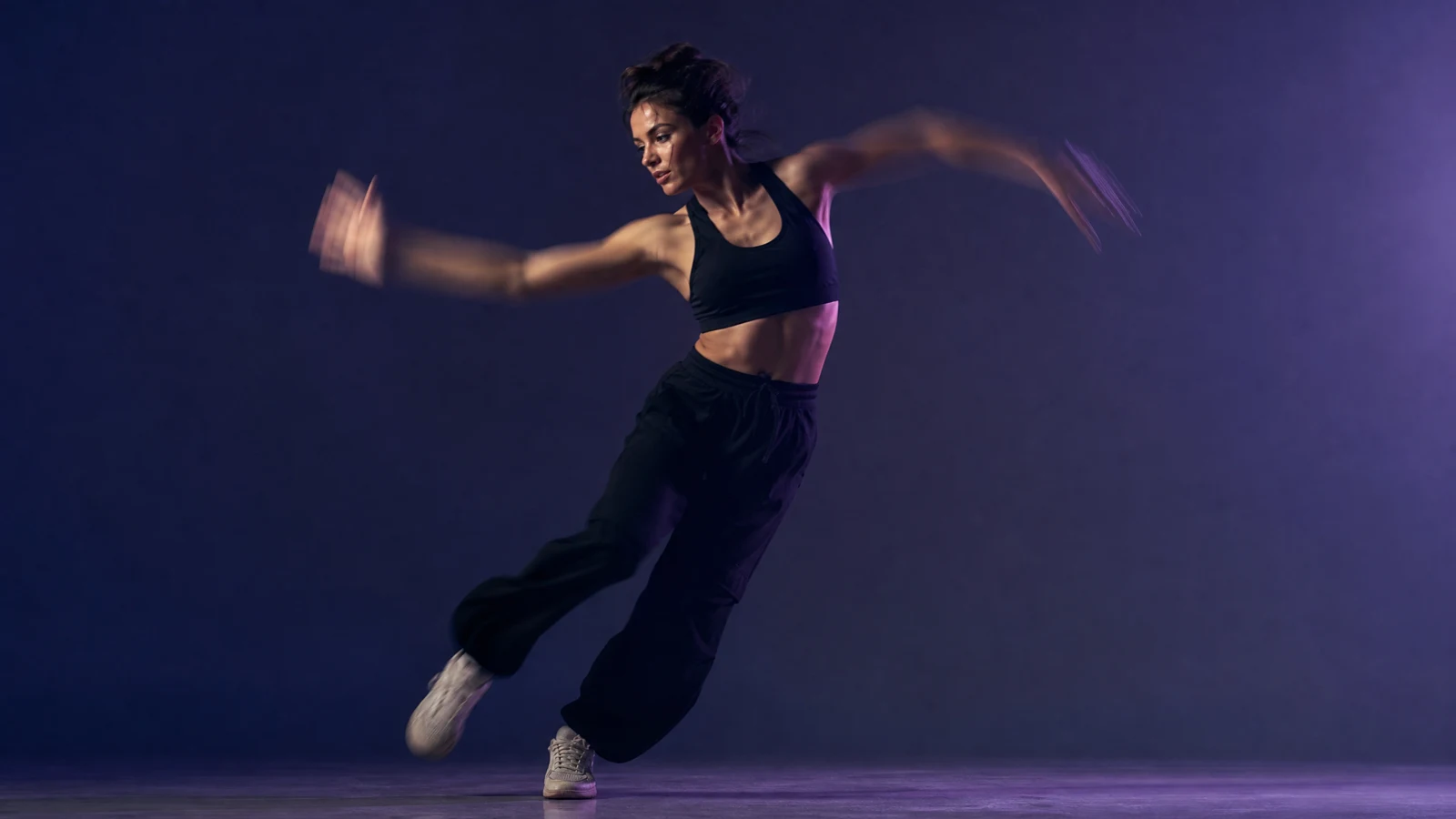
Every failed dance clip starts with a photo that could never dance. A head-and-shoulders portrait cannot show footwork, and asking for a full routine from a cropped frame is how you get a torso that folds in half.
The rule is simple: the frame decides the motion vocabulary. Work from your photo inwards, not from the dance you imagined. Presets are in the AI dance video guide.
Match the motion to the framing
| Your photo shows | Ask for | Do not ask for |
|---|---|---|
| Head and shoulders | Head nod, shoulder roll, small sway, blink | Steps, spins, arm swings |
| Waist up | Shoulder and arm movement, sway, clap | Footwork, jumps |
| Full body with space at the sides | One or two steps, weight shift, arm swing | Choreography, partner work |
| Full body in a tight frame | Subtle groove, weight shift | Anything the frame cannot contain |
If the frame is tight and you want a real dance, take a new photo. Five minutes with a phone camera beats twenty generations.
The photo checklist
- Space. Arms need room on both sides; feet need room below.
- One person. Two dancers means two identities to keep stable.
- Even light from the front or side. Backlit silhouettes lose the joints the model needs to track.
- Plain background. A busy one competes with the moving limbs.
- Sharp. Motion blur in the source becomes invented motion.
Three prompts by framing
Head-and-shoulders sway
Animate the uploaded person with a gentle head nod and a slow shoulder sway. Keep the face, hair and clothing unchanged. Fixed camera, soft natural light, no extra limbs, no text.
Waist-up groove
Animate the uploaded person doing a relaxed upper-body groove: shoulders alternate, arms swing loosely at the sides, head keeps a light rhythm. Keep identity and outfit consistent. Steady medium shot, no cuts, no extra people.
Full-body step
Animate the uploaded person taking one step left and one step right with a loose arm swing, weight shifting naturally between the feet. Keep the face and outfit consistent, maintain a steady full-body frame, natural joint motion, no extra limbs, no text.
Prompt lab
Edit a tested prompt before you generate
Pick a direction, change the details to match your source, then copy it or open the workspace with the prompt already loaded.
Head, shoulders, small steps.
Browsing and copying prompts is free. Generation uses purchased credits, and the workspace shows the credit cost before you run a job.
Note what each prompt does not contain: a named dance style, a tempo, or a reference to a specific routine. Style names pull the model toward whole-body choreography it cannot resolve in five seconds.
When legs turn into noodles
Legs are the failure point, and they fail in this order:
- Too much motion. Halve it. One step, not a routine.
- Clip too long. Four seconds of a single step reads better than ten of a sequence.
- Feet out of frame at the start. If the source cuts the ankles, the model invents them.
- Busy floor. Patterned floors make the feet hard to track; simplify the background.
- Wrong framing. A full routine requested from a waist-up photo will always melt.
Two clips beat one long one
For anything longer than a few seconds, generate a short clip per beat and cut them together. Each clip resets the pose, so drift does not accumulate, and a clip that fails can be replaced without regenerating everything.
The browser video tools trim and join locally, so assembling costs no credits.
Rights and consent
Dancing clips are usually made from photos of real people. Upload only photos you have the right to use, and get consent before publishing a clip of someone else. The acceptable use policy applies, including to fan-made characters.
Frequently asked questions
Can I make a photo dance if the person is sitting?
Yes, but expect upper-body motion only: shoulders, arms, head. A seated body asked to step will produce a standing figure that teleports out of the chair.
Why does the face change when the dance gets big?
Large motion spends the model's attention on limbs. Keep the motion small, keep the identity sentence at the start and end of the prompt, and shorten the clip.
Is a five-second dance clip long enough to post?
For a loop or a reaction clip, yes. For a routine, generate several short clips and cut them — the result is more stable than one long generation.
Was this guide useful?