
25 Halloween Costume Ideas for 2026 (AI Guide)
A trend-led costume list translated into original AI presets: mascot horror, dark braids, cosmic royalty, glow pets, disco and hero armor.
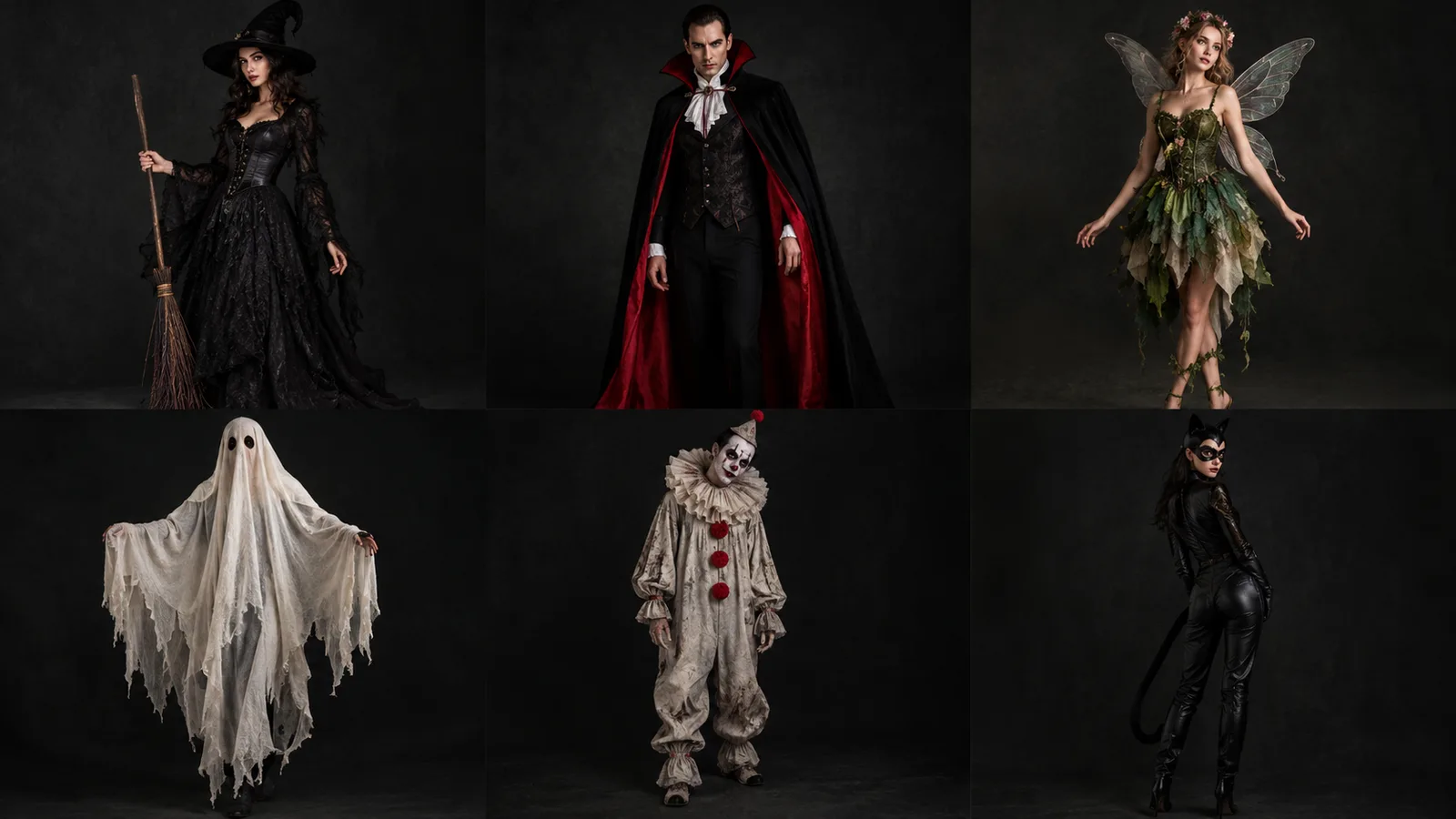
Halloween trend lists are useful for direction, not for copying. The most-searched costumes are often tied to a film, game or celebrity, and an AI generator should not pretend to own those characters. What it can do is translate the visual idea into an original preset: a silhouette, a palette, a prop and a light story.
Below are 25 directions for 2026, organized by the kind of image they produce. Each one can be built from the AI Halloween costumes presets, or adapted in the costume generator.
Mascot horror and creature looks
- Haunted unicorn. A plush horn, a pastel-and-charcoal hood, stitched details. Playful, not gory.
- Carnival mascot. A oversized head shape without a licensed character, a striped outfit, dim string lights.
- Friendly cryptid. A furry silhouette, a single glowing eye, a forest at dusk.
- Glow creature. A dark outfit with soft green or blue light lines, a foggy background.
- Plush predator. A soft toy texture, a wide grin, a clean studio. Keep it eerie, not violent.
These looks work because the silhouette is unusual. They are also easier to generate than a exact character because the model is not asked to reproduce a face it has never seen.
Dark fantasy and fashion
- Midnight braids. Long violet braids, silver charms, a modest gothic gown, a moonlit garden.
- Cosmic princess. A midnight-blue gown with star embroidery, a silver moon crown, a dark observatory.
- Forest witch. A moss-green cloak, leaf embroidery, a woven belt, a misty forest.
- Vampire royal. A high-collar velvet cape, antique silver, a candlelit hall.
- Skeleton glam. Clean white and black face paint, a modest black outfit, a fashion-editorial studio.
Dark fantasy is the strongest category for AI portraits because the costume is defined by fabric, color and silhouette. You do not need a specific face to make it read.
Hero and sci-fi
- Emerald armor. A modest green metallic suit, a simple mask, no logos.
- Galactic hero. Blue-and-silver armor panels, soft LED accents, a dark hangar.
- Visor hero. A clean visor, a blue-and-gold suit, a futuristic corridor.
- Space explorer. An original flight suit, a station window, a nebula outside.
- Cyber runner. A dark jacket with reflective piping, neon signs, rain-slick pavement.
Sci-fi costumes need clean geometry. Ask for “wearable costume” rather than “robot body” so the face stays human and recognizable.
Retro and music
- Disco duo. Brown and orange outfits, a warm dance floor, film grain.
- Rock star. A leather jacket, a vintage microphone, a smoky stage.
- Country legend. A rhinestone suit, a wide-brim hat, warm stage lights.
- Thriller-era dance. A red jacket, a dark street, a dramatic dance pose. Keep it a dance reference, not a character copy.
Retro looks benefit from a film-stock description: warm highlights, soft grain, slight halation. The grade does half the work.
Pets
- Pumpkin pet. A soft pumpkin body, a leaf collar, warm autumn studio.
- Glow dinosaur. A green glow, a dinosaur hood, a dim studio.
- Baked potato. A padded brown body, a butter-pat hat, silver foil.
- Tiny ghost. A soft white sheet with safe eye holes, a dim hallway.
Pet costumes should have one clear silhouette and no face covering. See the pumpkin pet costume generator for pet-specific prompts.
Couples and groups
- Gothic duo. A black pinstripe suit and a black lace gown, candlelight.
- Cowboy and angel. A western outfit and a celestial outfit, a moonlit desert.
For two people, use the couple Halloween costume generator and one photo per person. Name each person and costume explicitly.
How to turn a trend into an original preset
Take the trend name and write down the visual traits:
- Silhouette: What shape reads at thumbnail size? A horn, a crown, a cape, a wide collar.
- Palette: Two dominant colors. More than two becomes muddy.
- Material: Velvet, lace, leather, wool, metallic, plush.
- Prop: One object that explains the character. A lantern, a visor, a microphone.
- Light: Where does the light come from? A window, a lantern, a neon sign, a candle.
- Setting: One location. A garden, a hallway, a studio, a stage.
Then write the prompt in four parts: identity lock, costume, scene and light, exclusions. Do not use the trademarked name. Use the traits.
Try a trend preset
Prompt lab
6 tested directions
Pick a preset, edit the prompt, then copy it or open the workspace with the prompt already loaded.
593 characters · Generation uses purchased credits
The lab above loads the Haunted Unicorn direction. Edit the palette, the horn, or the background. The prompt is original; it does not reproduce a film character.
Which ideas are easiest for AI?
Start with looks that have a clear silhouette and a simple light story:
- Cosmic princess.
- Midnight braids.
- Pumpkin pet.
- Emerald armor.
- Gothic duo.
Avoid looks that depend on exact jewelry, small text, complex hand poses or a specific actor's face. Those details are where image models drift.
What to check before publishing
- The costume is original, not a copy of a licensed character.
- The face is recognizable.
- Hands and props are plausible.
- No invented text or logos.
- You have permission to use the source photo.
- The image follows the platform's synthetic-media rules.
The acceptable use policy and content moderation policy apply.
Frequently asked questions
Are these official costumes?
No. They are original directions inspired by broader trends. They do not reproduce licensed characters or logos.
Which idea is easiest for AI?
Choose a clear silhouette and a simple light story: cosmic royalty, dark braids, pumpkin pet or hero armor.
Can I use a trend name in the prompt?
Describe the visual traits instead of the trademarked name. That gives the model a clearer target and keeps the output original.
Can I generate a group?
Generate a couple first, then add more people in separate edits or composite the images in an editor.
Do I need a costume photo?
No. Start from a normal selfie or a text description. A clear source photo improves identity retention.
The bottom line
The best 2026 costume ideas for AI are not the exact trend names. They are the visual traits behind the trends: silhouette, palette, material, prop and light. Once you have those five, you can build an original preset that looks current without copying anyone.
Browse the AI Halloween costumes gallery for the six starting presets, or open the AI Halloween costume generator to apply one to your own photo.
Was this guide useful?
AI Halloween Costumes
Browse original costume directions, open a preset, and generate a Halloween portrait that does not copy a licensed character.
Read guide